




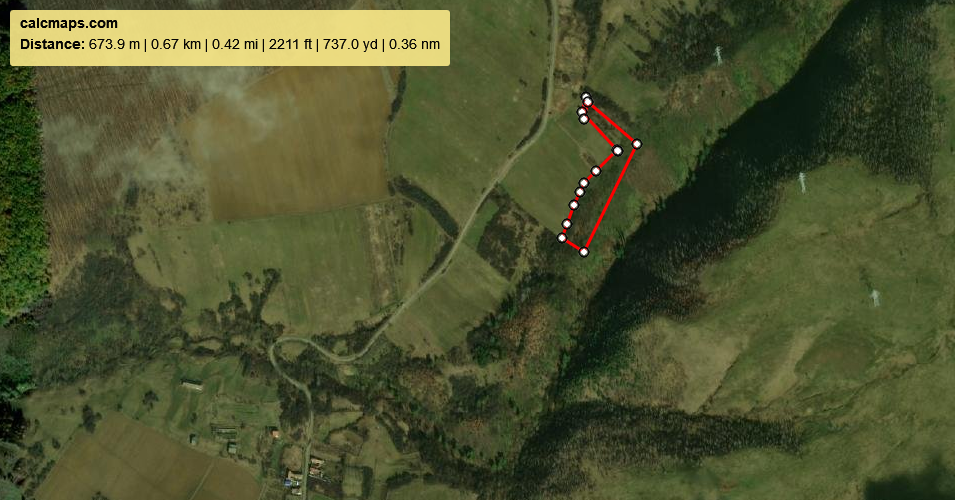
A vegetation fire that broke out on Wednesday afternoon in the Crucea Întăi area, near the village of Cărpiniș in Alba County, was completely extinguished only after five hours of efforts, after volunteers discovered and extinguished five active outbreaks remaining after the departure of the ISU teams.
The Cărpiniș Fire
A detailed two-part report analyzing the unfolding of the fire in the “Crucea Întâi” area and the system’s silence six months after the incident.
The incident, the second major one of its kind in the county in recent days, highlights the challenges of responding to wildfires in rural areas and the need for better coordination between professional firefighters and local volunteers.
Intervention timeline
17:00
Several locals observe the fire. M.P., who was at a distance, sees smoke rising from the Crucea Întăi area – a small forest of vegetation near the village, a favorite place for barbecues and parties – and sends the alert via WhatsApp.
In parallel, the first volunteer, S.C., arrives at the scene and begins to fight the flames alone, improvising with brooms from the nearby stream to throw water directly on the fire.
~19:00
D.A.O. climbs a nearby hill to assess the situation. Seeing the large volume of white smoke that continues to come out, he sends a voice message to M.P. on WhatsApp:
Hey, should we go help? There’s a lot of smoke coming out of there. Maybe we can do something…
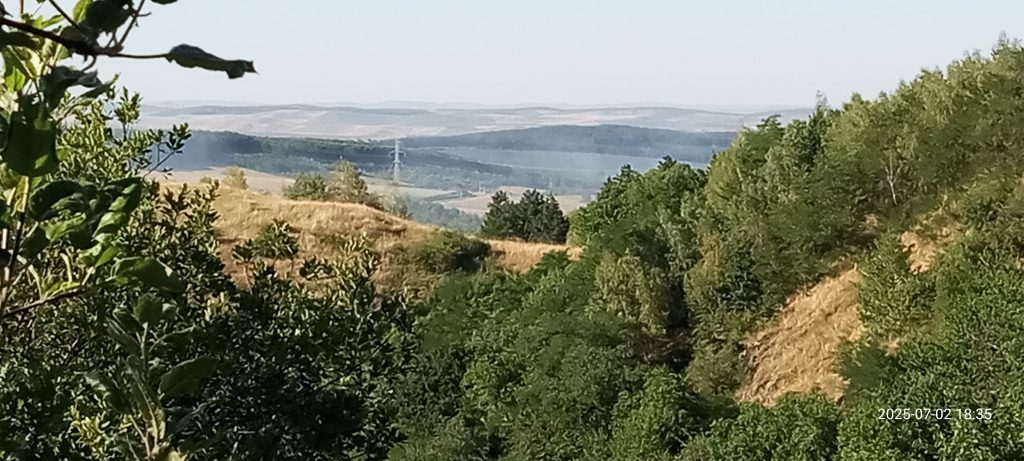

Între timp, alți voluntari locali se alătură lui S.C., iar autoritățile sunt alertate.
~20:15
The third group of volunteers – M.P. and D.A.O.’s group arrives (they find the intervention already underway)
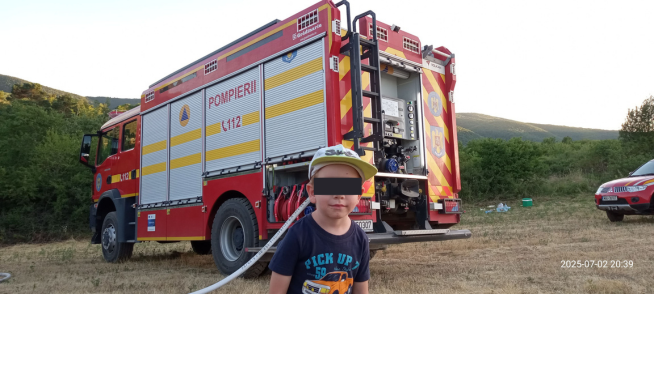
I find an intervention in progress:
- Two emergency special vehicles
- 2-3 private vehicles, one of which was towing a water tanker
- An all-terrain vehicle connected to the water tanker
- Approximately 20 people – professional firefighters and local volunteers
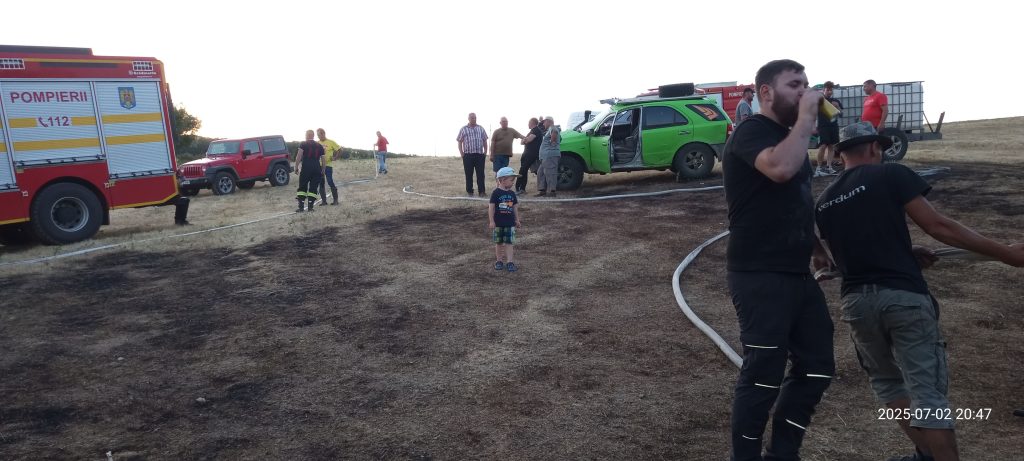
20:47
The firefighters consider the fire extinguished and begin to pack up their equipment. The atmosphere seems relaxed, and those present are hydrated.
At one point, I was lying on my stomach – I couldn’t breathe fresh air because of the smoke.
— C.F., volunteer firefighter
~21:00
Critical discovery: As the people prepared to leave, the D.A.O. volunteer looked more closely at the burned areas and discovered embers caught in the branches of some still-green bushes. He removed the smoldering pieces and doused them with carbonated mineral water, then discovered a root that was emitting smoke.
“Look, it’s still burning here!” — This is not just the first hotspot discovered by volunteers, but the first proof that the authorities’ intervention was declared “closed” prematurely. While up on the mountain it was believed that everything was extinguished, a bush hid a branch still in flames.
Initially, those present do not consider it a significant threat. However, several active outbreaks are soon identified that threaten to spread a new wave of fire.
“I see it’s burning from the roots here, on this one…” — This is the second hotspot discovered, smaller this time, but smoldering right at the root!
The firefighters run out of water in their tanker and leave the area, believing that the minor outbreaks can be managed. Only local volunteers remain.
“Why is smoke coming out?” — The climax of the evening: new hotspots are burning much more intensely, right at the roots, in Gârbova Valley!
„De ce iese fum?” — Punctul culminant al serii: noi focare ard mult mai puternic, la rădăcină, în valea Gârbovii!
~21:00-22:00
Final fight in the dark: Without a water tanker and no professional equipment, volunteers improvise desperate solutions to extinguish the five fires they discovered:
- Fill a single bucket from a plastic tank and repeatedly wheel it over the steep terrain
- Struggle to siphon water from a wide, damaged hose
- Carry water and tools down the steep hill in complete darkness
- One volunteer later admits to even using “bodily fluids” to put out a large, smoldering root
There were justified fears that sparks could cross the 2-foot-wide stream and ignite the pine forest near the village.
“But there’s so much smoke coming from there!” — a smoldering root stump
~22:00
The last fire outbreak was extinguished by volunteers after almost two hours of effort in the dark, carrying water with a single bucket over steep terrain.
Volunteer Testimonials
Later, at the village store, where volunteers gathered after the intervention, S.C. – the first to arrive on the scene – recalled how the firefight began:
This improvised method was used in the early moments of the fire, when S.C. was fighting the flames alone, before the firefighters arrived.
Cause of the Cărpiniș fire – contradictory versions
The exact cause of the fire remains unclear, with witnesses offering two main versions:
- Brushcutter hypothesis: The landowner was mowing the grass with a brushcutter that struck a rock, generating sparks that ignited the dry vegetation.
- Barbecue hypothesis: The fire could have been caused by a previous barbecue, with reports of a black car seen in the area at the time.
Crucea Întăi is a place frequented by locals for recreational activities, which increases the risk of accidental fires.
Regional Context

The Cărpiniș fire is the second major wildfire incident in Alba County in recent days. At the time of writing, the fire in the Strungari area was still not completely extinguished, demonstrating the extent of the wildfire problem in the region.
Analysis: What didn’t work and what needs to be improved
The Cărpiniș incident highlights several systemic deficiencies in the management of wildfires in rural areas:
Critical issues identified
- Incomplete assessment of the situation: Firefighters considered the fire extinguished without a thorough check of areas where the fire could be smoldering in roots and plant material
- Lack of detection equipment: No thermal imaging cameras or other tools were used to identify hidden outbreaks
- Insufficient water reserves: The tanker emptied before the intervention was fully completed, with no additional reserves available on site.
- Poor coordination: There was no clear communication between professional firefighters and local volunteers about the actual state of the fire and the remaining risks.
- Absence of a surveillance system: A surveillance team was not maintained after the emergency vehicles left to monitor any possible re-ignitions.
- Limited alerting: No church bell or other mass alerting system was used to quickly mobilize more volunteers.
Recommendations for preventing similar situations
Forest fire management specialists warn that roots and plant material can continue to smolder for hours or even days after visible flames are extinguished, posing a major risk of re-ignition.
To prevent such situations, it is recommended:
- Systematic checks with thermal cameras before declaring the fire extinguished and leaving the scene
- Maintaining a surveillance team for at least 2-4 hours after apparent extinction, to monitor for possible re-ignitions
- Periodic patrol of the area over the next 24-48 hours, especially in windy or high temperature conditions
- Close coordination with local volunteers who know the terrain and can promptly report any anomalies
- Ensuring sufficient water supplies for areas without hydrants, including additional mobile tankers
- Using traditional alert systems (church bells) for rapid community mobilization
- Instruirea voluntarilor locali în tehnici de bază de stingere și evaluare a riscurilor
- Creating a local reserve of equipment (shovels, rakes, portable pumps) that can be quickly accessed in case of emergency
The crucial role of the local community
The Cărpiniș fire demonstrates the vital importance of local volunteers in managing emergencies in rural areas. Without their prompt intervention and determination to continue their efforts after the departure of professional firefighters, the consequences could have been devastating.
Positive aspects highlighted by this incident:
- The quick reaction of S.C., who started fighting the fire before the authorities arrived
- The spontaneous mobilization of several volunteer groups
- The vigilance of D.A.O., who noticed the remaining outbreaks when others considered everything in order
- The determination to continue the efforts in the dark, without adequate equipment
- The creativity in improvising solutions (brooms from the stream, a single bucket, siphoning from a damaged hose)
However, volunteers should not have been left to manage active outbreaks alone after professional forces left. This points to the need for better coordination between the ISU and local communities.
Conclusions
The Crucea Intai fire, Cărpiniș, serves as a telling example of the challenges faced by wildfire response in rural Romania. The event highlights both the dedication and courage of local volunteers and the urgent need to improve response and coordination protocols.
The main lesson is clear: a fire is not truly extinguished as long as there is a possibility of rekindling. Superficial checks and premature departure from the scene can turn an apparently successful intervention into a new emergency.
At the same time, the incident highlights the invaluable value of local communities in emergency management. Knowledge of the terrain, rapid response, and the commitment of volunteers can make the difference between an averted tragedy and a catastrophe.
For the future, it is essential to develop integrated systems that capitalize on the strengths of both parties: the professionalism and equipment of the ISU, combined with local knowledge and the rapid mobilization of volunteers. Only through such a coordinated approach can we hope to effectively manage the increasing risk of wildfires in the context of climate change.

