




More than a decade ago, a disturbing case from Botoșani County, Romania, briefly caught the public’s attention — not for its medical depth, but because of a viral video showing Valeria Iurescu singing “Da, da, da” nonstop. What seemed bizarre or even humorous on the surface was, in reality, a heartbreaking example of untreated illness, poverty, and gaps in healthcare.
Who Was Valeria Iurescu?
Valeria Iurescu was a 65-year-old woman from the village of Albești in northeastern Romania. In 2013, her husband brought her to the emergency hospital in Botoșani City after she had been repeating the phrase “Da, da, da” continuously for nearly a week.
He did so out of desperation — the constant singing had become unbearable, but more importantly, it was clear that something was seriously wrong.
Underlying Cause: Advanced Diabetes and Mental Health Decline
Valeria Iurescu suffered from complications related to advanced diabetes. In a chronic state, this disease, when poorly managed, can lead to neurological and psychological effects.
Although the precise diagnosis was never widely reported, doctors suspected psychiatric complications linked to the progression of her illness.
According to available reports, she was initially admitted to the nutrition-related illnesses ward of the Botoșani County Hospital (Spitalul Județean Mavromati). It is not a local communal clinic, as sometimes speculated. Her long-standing battle with diabetes — over 16 years — had reached a critical point. Due to her continuous singing, she was transferred to the psychiatric ward of the same hospital.
After several days, as her condition worsened and the local facilities were unable to manage her case effectively, her family decided to transfer her to Spitalul Clinic de Psihiatrie „Alexandru Obregia” in Bucharest for further investigation.
Unfortunately, the case was not treated purely as a medical emergency. Local media reports noted that staff had to restrain her at one point. While such measures can be necessary for patient safety, they also reflect the limitations of healthcare infrastructure in many rural parts of Romania.
A Viral Moment That Missed the Deeper Message
The video of Valeria — seated beside her husband, repeating the same line over and over — went viral. In it, her husband can be seen offering her a drink from a brown plastic bottle.
That type of bottle is a standard container used in Romanian villages for alcoholic beverages.
Many viewers online found the scene oddly comical. But for those who looked closer, it was a troubling glimpse into the lives of older adults in under-resourced regions, battling chronic illness with limited medical access and even less public understanding.
The Broader Context: Healthcare in Rural Romania
Valeria Iurescu’s story is not an isolated one. In many poor or rural areas of Romania, residents face limited access to doctors, mental health services, and education about chronic conditions like diabetes.
Preventative care is often unavailable, and diagnoses are frequently delayed.
A 2019 public health report placed Botoșani County mid-range in terms of harmful alcohol consumption.
This metric surpases the average in healthcare investment. In communities like Albești, it’s not uncommon for symptoms to go untreated or misinterpreted — sometimes until it’s too late.
Sometimes, the distances to hospitals discourage the ill and older people from suffering in silence.
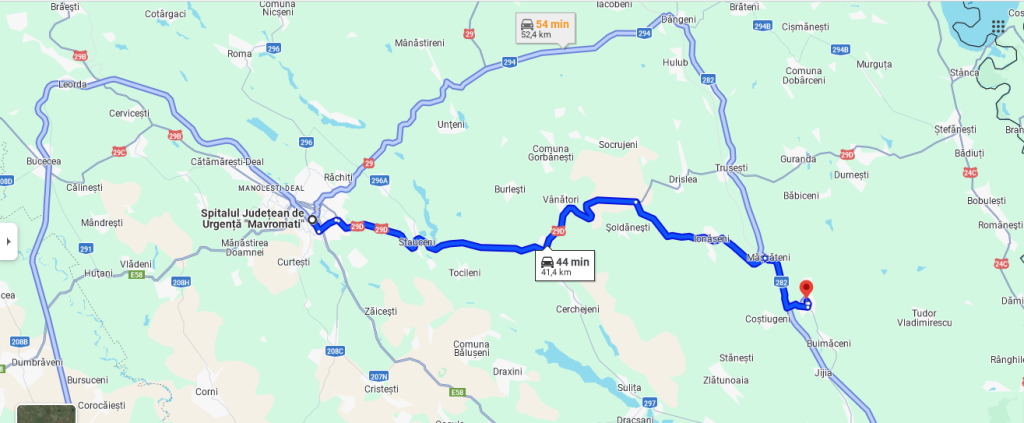
However, there is hope amid the inaccessibility of medical services.
New Initiatives: The “Sănătatea vine la tine” Medical Caravan
In response to the long-standing healthcare access issues, especially in underserved rural areas, new projects have emerged to bring medical services directly to vulnerable populations.
One such initiative is the “Sănătatea vine la tine” (Health Comes to You) caravan, organized by the Alianța Pacienților Cronici din Romania (APCR).
In its fourth edition, from May to June 2025, this project will offer free medical screenings for cardiovascular diseases, diabetes, and obesity.
Approximately 1,000 people in rural communities will benefit these screenings.
Teams of doctors, residents, nurses, and healthcare students will visit eight localities across six counties: Giurgiu, Argeș, Călărași, Bacău, Buzău, and Constanța.
The purpose is to consult, inform, and educate patients about the risks and complications of these chronic diseases.
The caravan operates in two stages per locality: first collecting biological samples, then interpreting results, and conducting further tests. Screenings include blood counts, cholesterol profiles, blood sugar and glycated hemoglobin tests and kidney function tests.
Iron levels, hormonal assessments, and cardiovascular evaluations, such as EKGs and blood pressure measurements are also subject to analysis. The project also calculates cardiovascular risk and body mass index to offer comprehensive preventive care.
Cezar Irimia, president of APCR, emphasizes the urgency:
Too many Romanians in rural areas reach doctors too late.
Visual Insight: Romania’s Celebrated Wine Regions vs. Healthcare Gaps
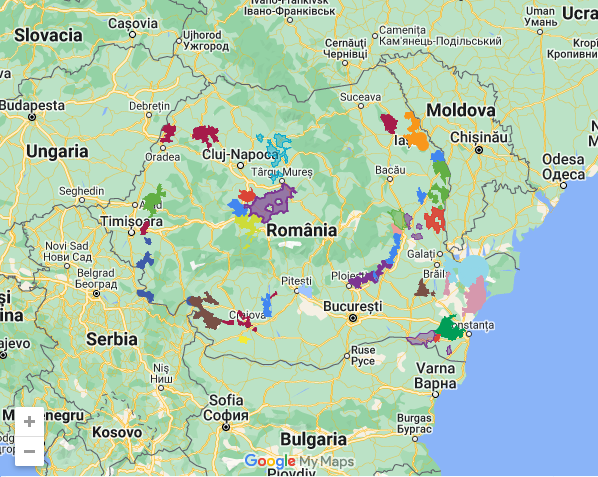
Despite being home to some of Europe’s oldest and most prized wine regions — as shown in the map of Denominations of Controlled Origin (DOC) below — many of these same rural areas face severe gaps in healthcare infrastructure. Regions like Moldova, where Botoșani is located, are known for agricultural richness but not for accessible medical services.
This paradox highlights the disparity between economic and cultural identity, as well as the allocation of public health investments.
Many lives are lost due to preventable or manageable diseases when discovered early. This caravan brings healthcare where it is most needed, and offers hope for a healthier future to the most vulnerable.”
In addition to medical testing, the initiative places a strong emphasis on patient education, distributing materials, and raising awareness about chronic diseases and the importance of prevention.
Healthcare Challenges in Romania: The Bigger Picture
Romania ranks first in the EU for mortality from treatable causes and near the bottom for deaths from preventable causes, according to the 2024 “Health at a Glance: Europe” report. Life expectancy is among the lowest in Europe, and healthcare spending per capita is significantly below the EU average.
Chronic diseases like diabetes and obesity continue to rise, with diabetes prevalence up 41% since 2012 and obesity growing annually at 3.1%.
Despite over 1.5 million people being treated for diabetes, many remain undiagnosed. There is a critical need for early detection and management.
Proposed Mobile Health Offices and Digital Solutions
Building on these grassroots efforts, Romanian health officials have proposed the creation of mobile health offices — medical vans equipped with diagnostic tools and staffed by medical personnel — to reach patients in remote areas.
Supported by cloud-based systems for rapid diagnostics and a digital platform to reduce waiting times, the plan aims to establish 117 units nationwide, delivering tens of thousands of medical services annually.
Had such systems been in place during Valeria Iurescu’s illness, earlier intervention might have slowed her decline or at least improved her quality of life.
Her Final Years and Legacy
Valeria Iurescu passed away in 2014 due to diabetes complications. Given better access to healthcare and early treatment, she might have lived longer. Her story reminds us that behind viral videos are real people suffering real pain — and that systemic improvements in rural healthcare are urgently needed.
Conclusion on Valeria Iurescu’s case
Valeria Iurescu’s case, among others, though sensationalized at the time, speaks to a deeper issue: how poverty, lack of access to healthcare, and untreated chronic illness can create heartbreaking — and sometimes surreal but very real — situations. Her story was turned into a viral moment, often stripped of dignity, misinterpreted by the public, and even used out of context in radio broadcasts or online media.
When such portrayals cross the line into ridicule or exploitation — especially of vulnerable individuals suffering from mental or physical illness — it’s not just unethical. It may also be reportable under Romanian media law. Suppose content like this is aired on radio or television, especially in a way that dehumanizes or mocks.
In that case, it can be reported to the Consiliul Național al Audiovizualului (CNA), Romania’s official media regulatory authority. Complaints can be submitted directly through www.cna.ro, with details such as the broadcast date, station, and the nature of the offense. Additionally, suppose the content promotes stereotypes or discriminates against individuals with disabilities or health conditions. In that case, the Consiliul Național pentru Combaterea Discriminării (CNCD) also provides a legal route for reporting and addressing such issues.
Valeria Iurescu passed away in 2014 due to diabetes complications. Given better access to healthcare and early treatment, she might have lived longer. Her story reminds us that behind viral videos are real people suffering real pain — and that systemic improvements in rural healthcare are urgently needed.
Her legacy is not just a cautionary tale of systemic failure but also a poignant reminder of the urgent need for improved healthcare, responsible media, and empathy toward the most vulnerable in our society.
🌱 Support independent research and storytelling focused on human rights, healthcare, and underrepresented voices.
💛 Morraevo is an independent, self-funded project. If you value this work, consider supporting it here.
If you liked this article, you might enjoy reading How Investing Pro Changed My Approach To Investing

💡 Reflect. Support. Get Involved.
🩺 Explore the deeper realities behind viral moments and how they reflect real social, medical, and ethical failures.
💬 Valeria Iurescu’s story reveals how digital virality can overshadow vulnerable lives — and why systemic change in healthcare and media ethics matters now more than ever.
If you see similar cases, don’t hesitate to contact me.
⚠️ Disclaimer: All content presented is based on publicly available reports, media coverage, and documented health initiatives. While every effort has been made to ensure accuracy and balance, Morraevo cannot guarantee the completeness of third-party information or the full context of unfolding events.
News sources:
Health at a Glance: Europe 2024
Romanian National Institute of Statistics (Romanian language)
Valeria Iurescu’s archive (Romanian language)
Caravana Sănătatea Vine La Tine (Romanian language)
