





In March 2024, I bought AstraZeneca at the worst possible time—right after the company admitted its COVID vaccine caused blood clots and faced £255 million in lawsuits. Six weeks later, I closed the position with a 15% gain. Two weeks after that, the stock crashed 12% in 10 days.
AstraZeneca is one of the world’s largest pharma companies ($190B market cap), dominating oncology with blockbuster drugs like Lynparza. But in 2024, it faced a perfect storm: vaccine lawsuits, all-time high stock prices, and a P/E ratio of 38—double the industry average.
This case study shows exactly how I combined Elliott Wave analysis with fundamental metrics to time both entry and exit. You’ll see the exact charts, the red flags I spotted, and why “holding forever” isn’t always the best strategy.
Why AstraZeneca Looked Both Attractive AND Dangerous?
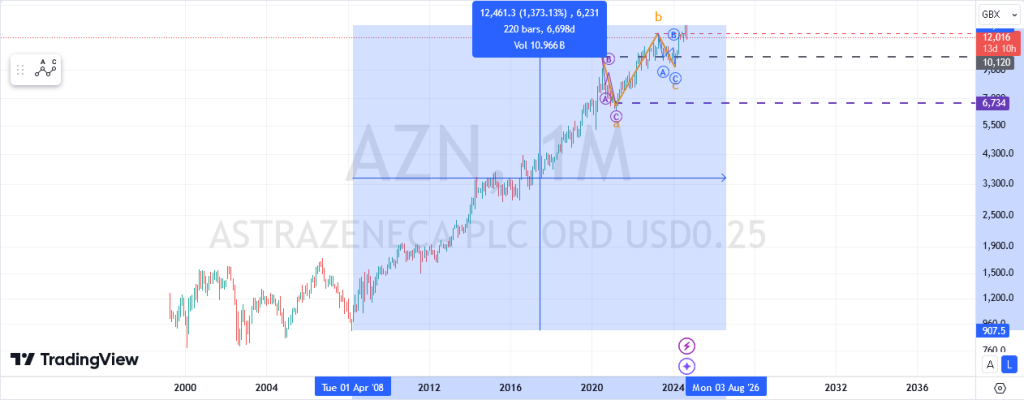
AstraZeneca Setup:
✅ BULL CASE
❌ BEAR CASE
The question: Was this buy of AstraZeneca stock a dip-buying opportunity or a trap?
AstraZeneca chart analysis
Using Refined Elliott Wave Theory, I identified a Running Flat pattern completing in March 2024:
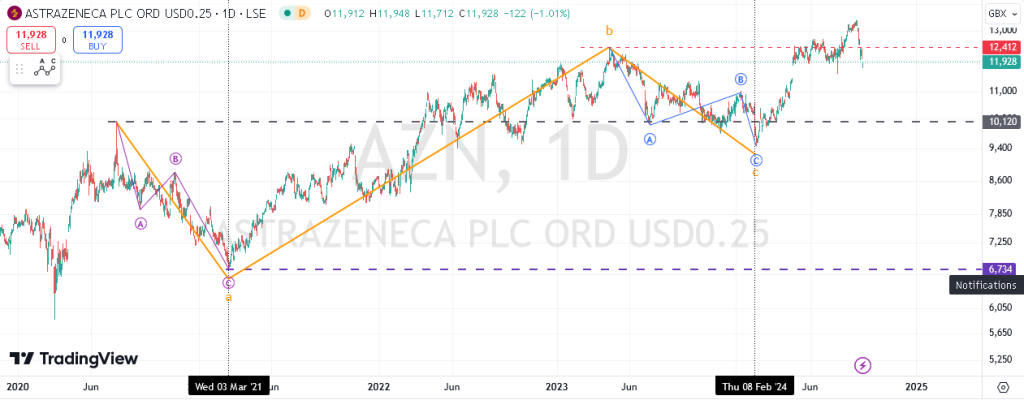
What this meant:
- Wave C had re-entered Wave A territory (textbook Running Flat)
- High probability of one final bounce before a major correction
- Risk/reward strongly favored a SHORT-TERM trade, not a long hold
The Two Red Flags That Made Me Exit (Even As Price Kept Rising)
🚩 RED FLAG #1: Technical Target Hit
Once price touched £122.80, the Elliott Wave pattern was complete. In mature bull markets, overshooting targets is common—but so are sharp reversals. I wasn’t going to gamble my 15% return waiting for £132.
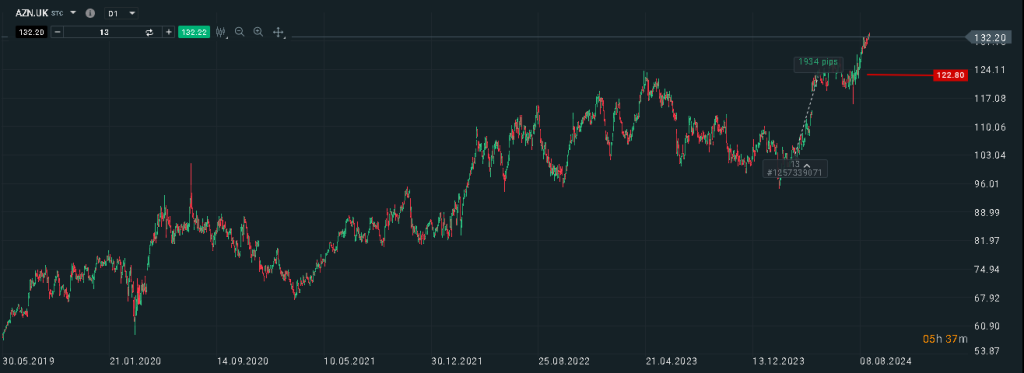
AstraZeneca ($AZN) price action hitting the target zone
🚩 RED FLAG #2: Fundamental Warning Signs
While profit margins looked great (82.6%), the underlying structure was concerning:
⚠️ Translation: Any disappointment or macro shock could trigger violent selling.
What happened next with the AstraZeneca stock?
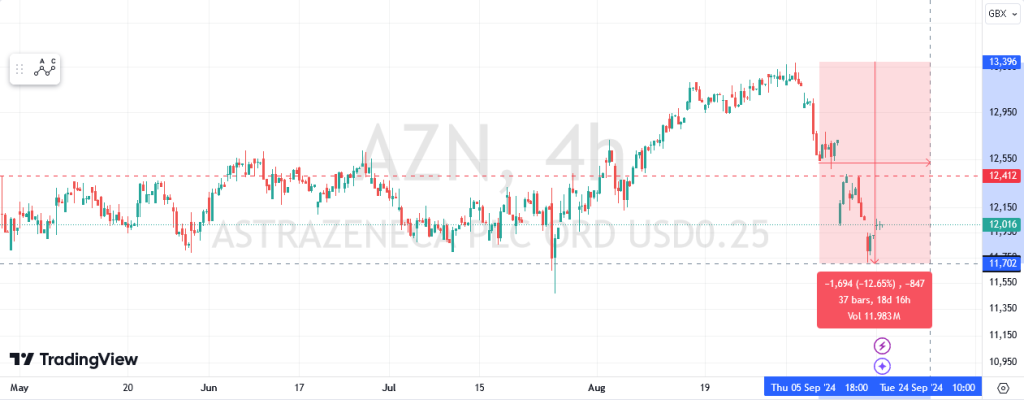
Ten days after I sold, AstraZeneca dropped 12%.
The stock briefly touched £132.20 after my exit—meaning I “left money on the table.” But that extra 7% would have turned into a 5% LOSS if I’d held just two more weeks.
This is why disciplined exits matter more than perfect timing.
AstraZeneca Financial Snapshot (as of exit):
Conclusion on AstraZeneca stock as of 15th September 2024
AstraZeneca remains a world-class company. P/E at 38x earnings after a 1,370% run, I’d rather wait for a better entry. Profit-taking beats hoping every time.
Would I buy again?
Only the end of a downside correction, signaling a lower valuation, and having strong fundamentals, too.